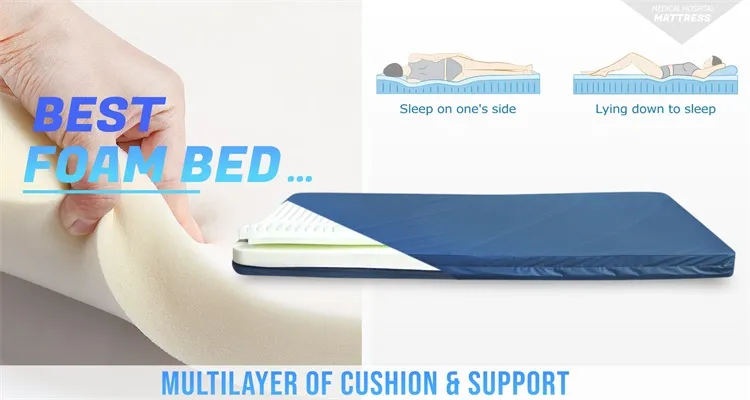
Although memory foam mattresses provide comfort and support, their compatibility with hospital beds can present challenges. Hospital beds typically feature a range of adjustable functions, and the mattress must be able to accommodate height and angle changes. Memory foam mattresses are often thicker and less flexible, which can limit the bed's ability to adjust properly.
For instance, the added height of a memory foam mattress might affect patient comfort or prevent the bed from adjusting to the intended position. If frequent adjustments are necessary, a thicker memory foam mattress may restrict the bed's range of motion or compromise stability.
Effects on Specific Patient Groups
Diabetic Patients
Patients with diabetes often suffer from skin problems that make them more susceptible to pressure injuries. For these patients, selecting a mattress that minimizes the risk of pressure sores is crucial. Memory foam mattresses can help reduce the risk of skin damage by distributing body weight evenly and alleviating pressure. However, it is important to ensure that the mattress's softness, firmness, and thickness are compatible with the hospital bed's adjustable features.
Obese Patients
Obese patients require mattresses that provide extra support due to their greater weight. While memory foam mattresses can improve comfort, they may not provide adequate support for heavier individuals, which could lead to discomfort and pressure points. In these cases, a mattress designed for higher weight tolerance would be a better option.
Patients at High Risk of Pressure Ulcers
Patients who are bedridden for extended periods or have limited mobility are at higher risk of developing pressure ulcers. Memory foam mattresses help reduce the risk of pressure ulcers by evenly distributing pressure and improving blood circulation. However, when used with a hospital bed, it is essential to ensure that the mattress does not interfere with the bed's ability to adjust. Regular position changes are critical in preventing pressure sores.
For patients with advanced care needs, specialized hospital mattresses such as alternating pressure or air mattresses may be more appropriate. These mattresses provide dynamic relief, adjusting pressure to various body segments and further reducing the risk of pressure ulcers.

When to Consider Using a Memory Foam Mattress
Despite potential compatibility issues, memory foam mattresses can be ideal in certain situations. Here are some scenarios where a memory foam mattress might be the best choice:
Short-Term Hospitalization or Home Care
If a patient is in the hospital or receiving care at home for a short period and does not require frequent bed adjustments, a memory foam mattress can provide additional comfort.
Low Risk of Pressure Ulcers
For patients with a low risk of developing pressure ulcers, memory foam mattresses are a great option. The mattress helps evenly distribute pressure, preventing mild pressure ulcers and enhancing comfort.
Elderly Care
Elderly patients often suffer from joint and bone issues, requiring softer mattresses to minimize body pressure. Memory foam mattresses provide the necessary comfort for elderly patients with limited mobility or increased vulnerability.
Enhancing Sleep Quality for Patients
Memory foam mattresses can improve sleep quality for patients experiencing discomfort or pressure points. This type of mattress is particularly beneficial for those suffering from arthritis or back pain, as it alleviates pressure on sensitive areas and improves overall comfort.
Patients with Lower Body Mass
For lighter patients, memory foam mattresses provide sufficient support and comfort without the risk of sinking too deeply. These mattresses offer a good balance between comfort and pressure relief for patients with lower body mass.
Addressing the Key Factors When Selecting a Mattress
When selecting a mattress for a patient, family members should consider the patient’s health status, body shape, and specific needs. For patients with comorbid conditions such as diabetes or obesity, or those who are frequently immobilized, the mattress should offer adequate support and pressure relief. Additionally, the mattress must be compatible with the hospital bed’s adjustable features to ensure proper positioning and comfort.
In cases where patients have more advanced care needs, specialized hospital mattresses with features like alternating pressure or air mattresses may be more suitable.
Conclusion
Using a memory foam mattress on a hospital bed is possible, but it depends on individual patient requirements, the mattress’s thickness, and the bed’s adjustability. Choosing the right mattress is critical to preventing pressure sores, especially for diabetic, obese, or high-risk patients. For patients with specialized needs, hospital-grade mattresses, such as alternating pressure or air mattresses, may be the best option to provide optimal care and reduce the risk of pressure ulcers and other complications. Therefore, family members should carefully evaluate the patient’s health condition and select the mattress that best fits their needs.