
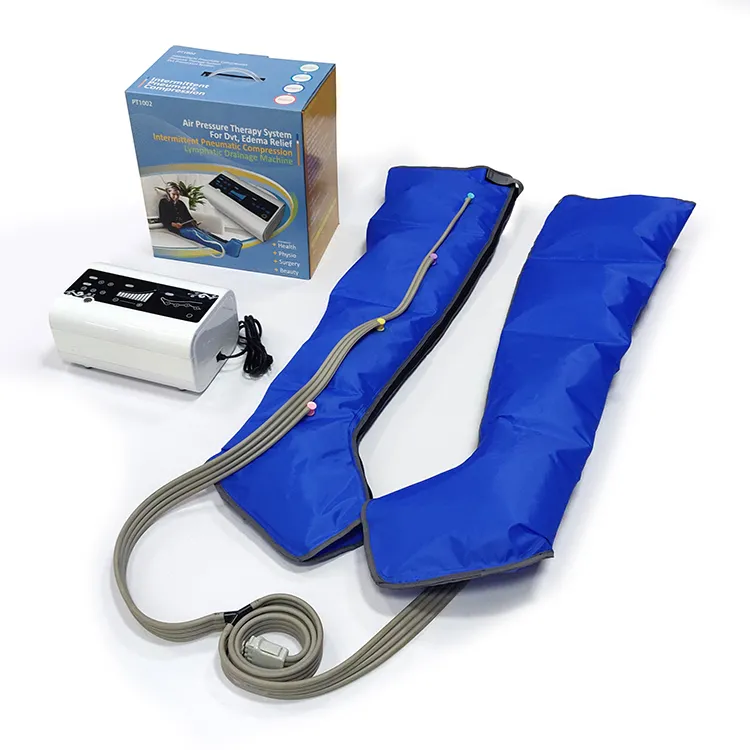


Introducción del producto:
The definition of pneumatic compression boots is based upon the activity occurring within the boot. Each full-leg sleeve on the Senyang PT1002 has four separate air chambers. The Senyang PT1002's powered controller directs air through these chambers in a predetermined order, providing a consistent series of compressed areas from the bottom of the boot to the top of the leg.
The current section will focus on the design of the PT1002 system and its operation, including how the chambers work, the differences between Mode A and Mode B, the method of selecting pressure and duration of treatment, and what a purchaser needs to consider before making a decision about the proper boot size or full treatment package.
Características y ventajas del producto:
- Modo A.B disponible: Personaliza tu experiencia terapéutica con la selección del modo A.B.
- Rango de presión: Rango de presión preciso de 20-250mmHg (±10~15%) para un tratamiento eficaz.
- Opciones de temporizador: Elija entre sesiones de 10, 20 o 30 minutos para mayor versatilidad.
- Consumo de energía: Uso eficiente de la energía a 40VA.
- Compatibilidad de voltaje: Funciona tanto con AC110V/60Hz como con AC220V/50Hz para un uso global.
- Diseño compacto: Tamaño de la máquina portátil de 260170130mm (LWH) y peso de 2,5kg.
- Certificaciones: Las certificaciones FDA, 510K(K161907) y CE garantizan el cumplimiento de las normas de calidad y seguridad.
Especificaciones del producto:
- Aplicaciones médicas: Adecuado para el drenaje linfático, la mejora de la circulación sanguínea y el alivio de edemas.
- Utilidad deportiva: Ideal para la relajación deportiva, la recuperación y el tratamiento de lesiones.
- Terapia de masaje: Versátil para uso doméstico y en entornos profesionales como salones de belleza.
- No dude en comunicármelo si necesita más detalles o modificaciones del contenido.


Inside the Four-Chamber Boot
Each leg sleeve has 4 air-filled zones. There aren't 4 individual pumps, there is a single controller that uses a multi-channel hose to deliver air from each of these chambers. This controller controls the timing for delivery of air from each chamber.
The chambers in the boots provide a graduated compression pattern along the length of the leg. As such, the compression pattern does not treat the whole boot as a single inflation zone, but rather progresses up the leg. The chamber boundaries and overlaps are engineered to allow continuous coverage from zone to zone while allowing for independent pressure changes within each zone throughout the programmed compression cycle.
The boot configuration covers the entire foot, calf and thigh. The sleeve size, zip location, and circumference will determine how close each chamber sits to the leg. Therefore, the specifications for the garment are a functional component of the system rather than just a simple accessory.
Mode A and Mode B
PT1002 offers two preset programmes. Both use the same controller and four-chamber garment, but they organise the compression sequence differently.
Mode A and Mode B allow the user or programme operator to choose between the supported patterns shown in the product instructions. The exact chamber timing should be demonstrated with the current operating diagram or video rather than described with vague claims such as “advanced massage technology.”
The active chamber sequence also shows that programme selection and pressure selection are separate controls: the mode organises the inflation pattern, while the pressure setting adjusts compression intensity.
Pressure and Session Control
The PT1002 controller provides an adjustable pressure range of 20–250 mmHg. Pressure selection controls the intensity of the pneumatic cycle, while Mode A or Mode B determines the programmed chamber sequence. The 10, 20 and 30-minute timer options end the session automatically, supporting consistent product demonstrations and repeatable routines. Users can begin with a comfortable pressure and adjust the intensity through the touchscreen interface.


How to Check Boot Fit Before Starting
The boots need to be put on prior to making connections or turning up the power level. All of the fabric of each boot needs to fit snugly against the user’s feet, calves, and thighs. Users also need to ensure that the zippers on both boots are completely zipped, and that neither boot has been folded over at the back of the user’s knees, nor does any of the hose connections pull horizontally.
During initial inflation, stop if the compression feels painful, causes numbness or creates an obviously uneven area. Recheck the garment position and size, then restart with the sleeve fitted smoothly and the pressure returned to a comfortable level.
Controller, Hose and Garment Must Match
Pneumatic boots operate as a complete air circuit in which the controller output, hose channels, connector layout and garment chambers work together. Senyang supplies PT1002 as a matched system and clearly lists the controller, paired leg sleeves, hose set, voltage, plug, garment size, instructions and packaging in the quotation. For replacement boots or hoses, our team matches the component to the original PT1002 configuration.
Setup and Operating Sequence
- Confirm that the controller voltage and plug match the power supply.
- Place the controller on a stable, ventilated surface.
- Connect the multi-channel hoses firmly to the controller and boots.
- Put on both boots and close the fastening system evenly.
- Select Mode A or Mode B, set pressure and choose the session time.
- Start the system and observe the first complete chamber sequence.
- At the end, allow pressure to release before removing the boots.
If one zone does not inflate, turn off the controller and inspect the hose for a loose connection, twist or compression. Do not open the controller housing or puncture the garment to investigate an air-path problem.

Cuándo utilizar botas de compresión neumática para la recuperación:
Las botas de compresión neumática para recuperación se utilizan mejor después del ejercicio, tras largos periodos de pie o sentado, y cuando se busca mejorar la circulación sanguínea y reducir la hinchazón.
Cómo limpiar:
Mantenga la higiene y prolongue la vida útil de sus botas de compresión neumáticas Senyang siguiendo estos pasos de limpieza:
- Desenchufar: Desconecta las botas de la fuente de alimentación antes de limpiarlas.
- Limpieza de la superficie: Limpie suavemente el exterior con un paño húmedo y detergente suave.
- Mantenimiento interior: Utilice un cepillo suave o un paño para limpiar las superficies interiores sin introducir humedad.
- Secado: Deja que las botas se sequen completamente al aire antes de guardarlas.
Preguntas frecuentes
Are pneumatic compression boots the same as vibration boots?
No. PT1002 creates pressure by inflating air chambers. It does not depend on vibration motors or rollers inside the boot.
How many chambers are in each boot?
Each compatible full-leg sleeve in this configuration contains four air chambers.
Is pressure the same as the compression mode?
No. Pressure changes intensity, while Mode A and Mode B change the programmed chamber sequence.
How do I order compatible replacement boots for PT1002?
Send Senyang the original controller and garment configuration. We will match the hose channels, connectors, chamber layout and boot size to the PT1002 system.
Is PT1002 battery powered?
The standard PT1002 is available in AC110V/60Hz or AC220V/50Hz configurations. Senyang matches the voltage, plug and electrical label to the destination market when confirming the order.
Request a Complete PT1002 Pneumatic Boot System
Send us the required garment size, voltage, plug, quantity, destination market and branding plan. Senyang will confirm the current four-chamber boot, controller, hoses, documentation and package contents as one matched PT1002 system.


