
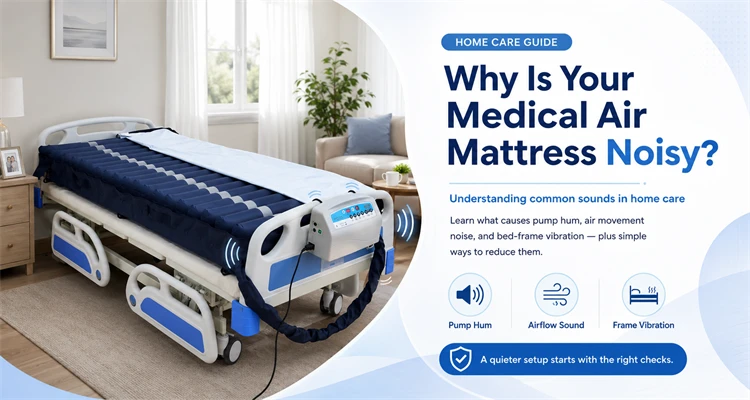
A medical air mattress pump is not completely silent. Its motor or compressor moves air, internal valves switch between air channels, and the mattress changes pressure through a repeating cycle. The practical question is whether the sound is normal for the system or has changed because of vibration, placement, restricted airflow, wear, or a fault.
Noise is especially noticeable in home care because bedrooms are quiet and the pump may run throughout the night. A sound that seems minor during a daytime demonstration can disturb sleep when it is amplified by a headboard, wall, hard floor, or loose pump bracket.
1. Understand The Sounds A Pump Normally Makes
Normal sound varies by pump design. A simple alternating pump may produce a steady motor hum with a subtle change as air moves between channels. A digital pump may add valve clicks, short pressure-adjustment bursts, startup self-test tones, and audible alarms.
Initial inflation can be louder or more continuous than normal running because the pump is filling the complete mattress. Auto-firm or maximum-inflation modes may also increase airflow temporarily. A repeating change that follows the stated cycle can be part of normal operation.
Common Sound Categories
| Sound | Possible Source | First Check |
|---|---|---|
| Steady low hum | Motor or compressor during normal operation | Compare with usual sound and operating mode |
| Soft periodic click | Valve switching between air channels | Check whether timing follows the cycle |
| Short louder burst | Pressure correction or initial inflation | Check mode, pressure setting, and mattress firmness |
| Buzz through the bed | Vibration transmitted by bracket, frame, or wall | Hold the pump lightly or isolate the contact point |
| Hiss near hose or mattress | Airflow, loose connection, open valve, or leak | Inspect connectors, CPR control, and cells |
| Rattle or scraping | Loose casing, bracket, fan, or worn internal part | Stop and arrange inspection if it persists |
| Beep or alarm pattern | Low pressure, power loss, fault, or service condition | Read the indicator and model instructions |
2. Motor And Compressor Design
The motor is the main continuous sound source in many pumps. Its speed, mounting, bearings, airflow demand, and casing insulation influence the sound level and tone. Pumps designed for a deeper mattress, faster inflation, higher user weight, or additional low-air-loss airflow may need to move more air than a basic overlay pump.
Sound specifications can help compare medical air mattress pumps, but a single decibel value does not describe tone, vibration, alarm volume, or the test conditions. Compare pumps under the same load, pressure setting, cycle, distance, and room conditions.
3. Vibration Can Sound Louder Than The Pump
A quiet motor can become intrusive when vibration is transferred into a large surface. The bed frame, wooden headboard, hollow floor, bedside cabinet, and wall can act as soundboards. Even a power cable or air hose touching the frame may create a repeating buzz.
Vibration Contact Points
- Pump hook against a metal or wooden bed end.
- Pump casing touching the wall, floor, or furniture.
- Loose bracket, handle, cover, filter cap, or cable restraint.
- Air hose tapping the frame as pressure changes.
- Power cable resting against an adjustable bed actuator.
- Bed castors or frame joints that are not stable on the floor.
During diagnosis, lightly support the pump without covering vents or pulling hoses. If the sound drops immediately, the main issue is probably transmitted vibration rather than the motor itself. Reposition the approved bracket or add only the isolation method allowed by the manufacturer.
4. Pump Placement Changes The Bedroom Sound
Most pumps are designed to hang from the bed end or stand in a specified position. The intended location supports ventilation, hose routing, alarm visibility, and protection from accidental impact. Placing a pump inside a cabinet or wrapping it to reduce sound can restrict cooling and hide alarms.
Leave the stated clearance around air inlets and outlets. Keep the pump away from curtains, bedding, thick carpet, water, direct heat, and locations where it can be kicked. If the pump can be used on the floor, confirm that the manual permits it and that dust intake will not increase.
5. Filters And Restricted Airflow
Many pumps draw room air through a replaceable or cleanable filter. Dust, lint, hair, and fibres can restrict airflow. The pump may then work harder or longer to reach the selected pressure, which can change its tone, raise operating temperature, or delay inflation.
Check the filter at the interval in the model instructions and more often in dusty homes, rooms with pets, or locations near bedding fibres. Use the specified replacement type. Running without a filter can allow contamination into the pump, while an overly dense substitute may restrict airflow.
Filter Check
- Switch the system to the stated safe condition before accessing the filter.
- Note the filter direction and cover position before removal.
- Look for darkening, lint, deformation, moisture, or damage.
- Clean or replace only as described in the instructions.
- Restart the pump and compare inflation time, sound, and alarm status.
6. Hoses, Connectors, And Air Leaks
A leak can make a pump run more often because it is continually replacing lost air. Loose hose connectors, an open CPR valve, damaged cells, split tubing, and worn seals can create hissing or increase motor runtime. A kinked hose can also restrict flow and change the sound.
Inspect the full route from pump to mattress. Confirm connectors are fully seated, hoses are not trapped by the bed frame, and the CPR control is closed. Listen near connections without bending over moving bed parts. Use the approved leak-testing method rather than applying household products to the mattress.
When evaluating alternating pressure mattress systems, test the matched mattress and pump together. A pump can sound normal on its own yet run continuously when connected to a leaking or incompatible mattress.
7. Pressure Settings And Operating Modes
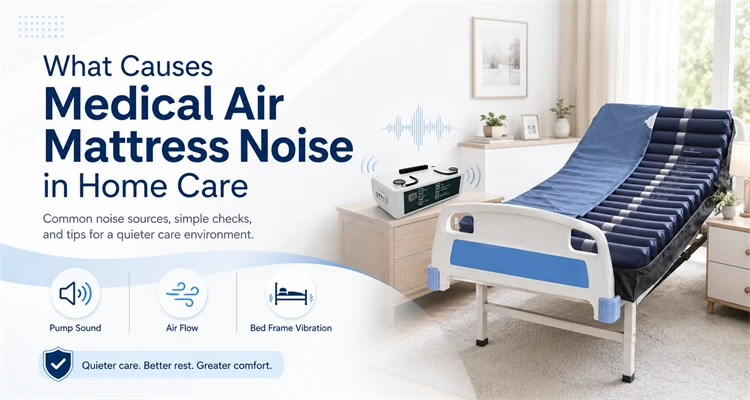
Pump behaviour changes with the selected pressure and mode. Higher pressure, auto-firm, initial inflation, and some static settings can increase running time. Alternating mode may produce regular valve changes. A low-pressure condition can keep the pump running and eventually trigger an alarm.
- Confirm the current mode and pressure or weight setting.
- Check whether auto-firm or maximum inflation is still active.
- Observe whether the sound follows the alternating cycle.
- Look for a low-pressure, service, or power indicator.
- Return changed settings only according to the care plan and model instructions.
8. Age, Wear, And Maintenance History
Pump sound can change gradually as bearings, valves, diaphragms, mounts, fans, and seals wear. Dust inside the casing, repeated impact, liquid entry, heat, or long running hours may accelerate change. A pump that has become louder over months needs a different response from a new pump that has always had the same steady tone.
Review the purchase or service date, previous repairs, filter changes, alarm history, and any recent drop or move. Compare with another pump of the same model if available. Internal inspection and electrical repair should be completed through the authorised service route rather than by opening the casing at home.
9. A Step-By-Step Noise Troubleshooting Process
| Step | Action | What The Result Suggests |
|---|---|---|
| 1 | Identify hum, click, buzz, hiss, rattle, or alarm | Narrows the likely source |
| 2 | Record mode, pressure, timing, and recent changes | Separates cycle behaviour from a new fault |
| 3 | Read indicators and resolve active alarms | Confirms pressure, power, or service conditions |
| 4 | Check pump contact with bed, wall, floor, and cables | Finds transmitted vibration |
| 5 | Inspect hoses, connectors, CPR control, and visible cells | Finds leaks, restriction, or loose connections |
| 6 | Inspect the filter according to instructions | Finds restricted intake or overdue maintenance |
| 7 | Compare sound after each single correction | Shows which change affected the noise |
| 8 | Arrange service for persistent rattle, scraping, heat, smell, or fault | Avoids continued use of a deteriorating pump |
Change one factor at a time. Moving the pump, replacing the filter, reconnecting hoses, and changing settings simultaneously may make the sound disappear without revealing the cause. A short audio recording and note of the operating mode can help service teams understand an intermittent problem.
10. When Noise Needs Technical Service
Arrange inspection when a sound is new, progressively louder, irregular, or accompanied by reduced mattress support, repeated alarms, unusual heat, electrical smell, visible damage, liquid exposure, or unreliable controls. Stop using the pump according to the care and equipment plan when continued operation appears unsafe or support cannot be maintained.
- Grinding, scraping, or impact sounds from inside the casing.
- Rapid clicking that does not match normal cycle timing.
- Repeated low-pressure alarms after connections and valves are checked.
- Pump casing that becomes unusually hot.
- Noise following a drop, spill, or power event.
- Sound changes together with slower inflation or reduced support.
Conclusion
Medical air mattress pump noise comes from both the pump and its surroundings. Motor operation, valve switching, vibration transfer, placement, filters, leaks, settings, age, and maintenance all influence what is heard in a home bedroom.
Start by identifying the sound and its timing, then check alarms, contact points, hoses, connectors, filters, and operating mode one step at a time. Persistent mechanical noise or any change linked with reduced support should move from home troubleshooting to technical service.
FAQ
Whether An Alternating Pressure Pump Should Run All Night
Many systems are designed for continuous operation and will cycle or correct pressure during the night. The model instructions explain expected operation and normal indicators.
Why A Pump Sounds Louder After Moving The Bed
The pump hook, hose, cable, bed end, or castors may now contact a resonant surface. Check placement and contact points before assuming the motor has failed.
Whether A Dirty Filter Can Increase Noise
A restricted filter can change airflow and make the pump work harder or longer. Inspect and maintain it at the interval stated for the model.
Whether The Pump Can Be Covered To Make It Quieter
Do not cover the pump or block its vents. Use the approved hanging or standing position and address vibration, contact points, and maintenance instead.
When A Hissing Sound Indicates A Leak
Some airflow sound can be normal, but a new localised hiss, longer pump runtime, softer mattress, or low-pressure alarm should prompt checks of connectors, valves, tubing, and cells.