Seat Cushions for Bed Sores and Prolonged Sitting
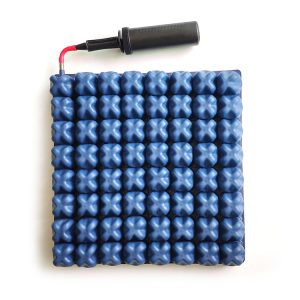
The Senyang NC501 seat cushion is designed for individuals that spend long periods of time sitting, and require an adjustable air supported surface. The interconnected TPU air cells adjust based upon the users weight, which helps evenly distribute pressure throughout the entire sitting surface. The manual inflation feature provides the ability to adjust the firmness level for use in various types of seating such as wheelchair, care chair, office chair, and vehicle seat.
The main focus of the NC501 design is pressure redistribution, adjustable comfort, multi-seat practical usage, portability and simple maintenance. As a non-powered cushion it does not require any electric controls to set-up. It can also be transferred to other applicable seating areas and re-adjusted according to changes in individual seating requirements.
How the Air-Cell Cushion Works
When a user is seated, the NC501 has replaced a single flat contact area with an array of raised, inter-connected air cells. These cells react to the user’s weight and distribute the contact over a larger portion of the cushion. When the user slightly shifts their weight, air flows through the structure and the cells alter their shape, resulting in a more pliable and responsive support surface than what would be provided by a rigid seat pad.
Pressure Redistribution Across Connected Air Cells
Each of the air chambers that make up the seat top provide support for the user's body. The raised cells on the top of the cushion will provide more contact area between the user and the cushion, thereby reducing the amount of pressure applied to the user's skin at those points where there may be a lot of weight or a point of concentration. The design of the cushion will allow it to adapt to the shape of the user when they sit, but will also allow the user to receive equal amounts of support throughout the entire surface of the cushion, even when there are minor adjustments made to the position of the user as they continue to sit for long periods of time.
Adjusting Firmness and Immersion
The firmness of the cushion is based upon the amount of air that is inside of it. When there is more air in the cell, then the cushion will feel firmer and sit higher. On the other hand, when you release some of the air from the cell, then the cell will deflate slightly so that it can conform to the shape of the user's body. The objective is to provide a stable base of support for the user rather than having the cushion inflated to its maximum potential. After the user has been seated on the cushion, then fine adjustments can be made which allow both the user and their caregiver to have more control over the firmness of the cushion than if the cushion had only one level of firmness.


Fit and Use Across Different Seats
The use of this product on a wheelchair, care chair, office chair or vehicle seat will depend upon proper placement. For successful use of the product, the seat needs to provide stability, the cushion must sit flat on the seat and the entire surface of the air cells must remain supported. This product should not be considered as a universal size for all seats.
Wheelchairs and Care Chairs
Measure the seat width and depth that can be used for sitting, which is defined by the distance between the two supporting side frames, and not by the total width of the wheelchair externally. The cushion must be positioned within the available seat space so that it is flat, without folding at the edges, and does not block the use of the wheel locks, arm supports or the transfer space. When the cushion has been placed on the seat, check to ensure that the inflation valve is still accessible and that it does not contact the wheelchair frame.
Cushion height will affect how a person sits. When selecting a cushion, it is important to consider how the cushion relates to other elements of the wheelchair, such as the footrests, arm supports and transfer areas. This will help ensure that the final product works well with all aspects of the wheelchair.
Office Chairs Vehicle Seats and Portable Use
The NC501 can be placed on other seats when the base is broad, stable and compatible with the cushion dimensions. Deep contours, narrow side bolsters or uneven seat bases may prevent it from lying flat. The manual, non-powered design is easy to carry between suitable seats, and the cushion can be deflated for compact storage without a powered unit.


Inflation Adjustment and Everyday Care
Consistent inflation, checking, and cleaning of the NC501 are all parts of maintaining a consistent "sitting" experience on a daily basis. Maintaining consistency on the NC501 also makes it easier to recognize when there has been a change in firmness or surface quality.
Setting the Air Level
- Place the uninflated cushion flat on the intended seat with the valve accessible.
- Open the valve and connect the manual pump or the inflation accessory supplied with the confirmed configuration.
- Inflate the cushion, close the valve and allow the user to sit down.
- Release a small amount of air when a softer, more conforming surface is required.
- Confirm that the seat fully supports the cushion and that its edges are not folded.
An over-inflated cushion may feel hard and rounded, while too little air may reduce support. Recheck the setting after a transfer, after moving the cushion to another seat, after cleaning or whenever the surface feels noticeably softer.
Cleaning Inspection and Storage
Clean the TPU surface with a non-abrasive, mild cleaning agent, make sure there is no leftover material on the cushion and let it completely dry prior to using it. Do not utilize sharp implements, extreme temperatures, aggressive cleaning agents or abrasive cleaning products. Prior to cleaning the product, check the valve, air cells and welded seams for potential damage.
For storage, store your cushion in a clean and dry area. When you have deflated the cushion, roll or fold it loosely; do not create a tight crease through either the valve or welded seams. In addition to being sure to center the cushion on the seat when you sit for long periods, make sure that the cushion is still centered and flat and that you can feel that the amount of air in the cushion is similar to what it was initially.

Choosing an NC501 Configuration
Selection must start by defining the seat that is being bought for, and also the type of setting it is used in. The buyer must determine the actual width and depth of the seat, how high they would like their cushion to be, how soft or firm they want the cushion to feel, how often they plan to use the cushion each day, and if the cushion will stay in one place or travel from one chair to another.
Seat Requirements and Daily Use
Confirm seat width, depth, base shape and the available space around moving parts or side supports. Also consider who will adjust the air, how often the cushion will be moved and how cleaning will be managed. A manual configuration is practical when an adjustable surface is required without a powered pump, electrical connection or controller maintenance.
OEM and Private-label Supply
Senyang provides the NC501 for use in mobility, rehabilitation, and seating products. Project possibilities may involve the size of the cushion, its color, the company's logo, the language used on the label, the directions for its operation, and how it will be packaged. Prior to beginning a sample run or mass production of the item, we verify the type of material to be used, the inflationary device needed to fill the product with air, and the method of packaging that will be employed. This verification process ensures that both our initial samples and subsequent production runs are of equal quality.
In order to make an inquiry please provide us with your desired seat type, the target measurements, the number of units required, the intended market for this item, your branding requirements and how you would like the item packaged. This information will enable us to assess the possibility of providing the configuration requested and generate a more precise quotation.
Frequently Asked Questions
How does the NC501 differ from a foam cushion?
The NC501 uses connected air cells, so its firmness and immersion can be changed by adjusting air volume. A foam cushion has a fixed material structure and a more fixed sitting feel.
How firm should the cushion feel?
It should feel stable and supportive without becoming hard or over-rounded. After the user sits down, small amounts of air can be released until the cells conform more closely while maintaining support.
Can the cushion be used on different chairs?
Yes, when each seat is stable and compatible with the cushion dimensions. Check the fit and air level whenever the cushion is moved to a different seat.
What information is needed for an OEM enquiry?
Provide the seat type, target dimensions, quantity, colour, logo, label language, packaging requirements and destination market. Senyang will then confirm the available NC501 configuration.